Employee listening & executive reporting

Turn survey and listening data into a clear account of what is changing, why it matters and what leaders should do next.

The need

Survey scores create activity. Driver evidence creates decisions.

Useful after an engagement survey, during organisational change or when leaders need one evidence-based employee narrative.

What this builds

  • Executive narrative and priority drivers
  • Segment, theme and root-cause analysis
  • Action measures, owners and tracking approach

Live example · synthetic data (Crescent Consulting Ltd)
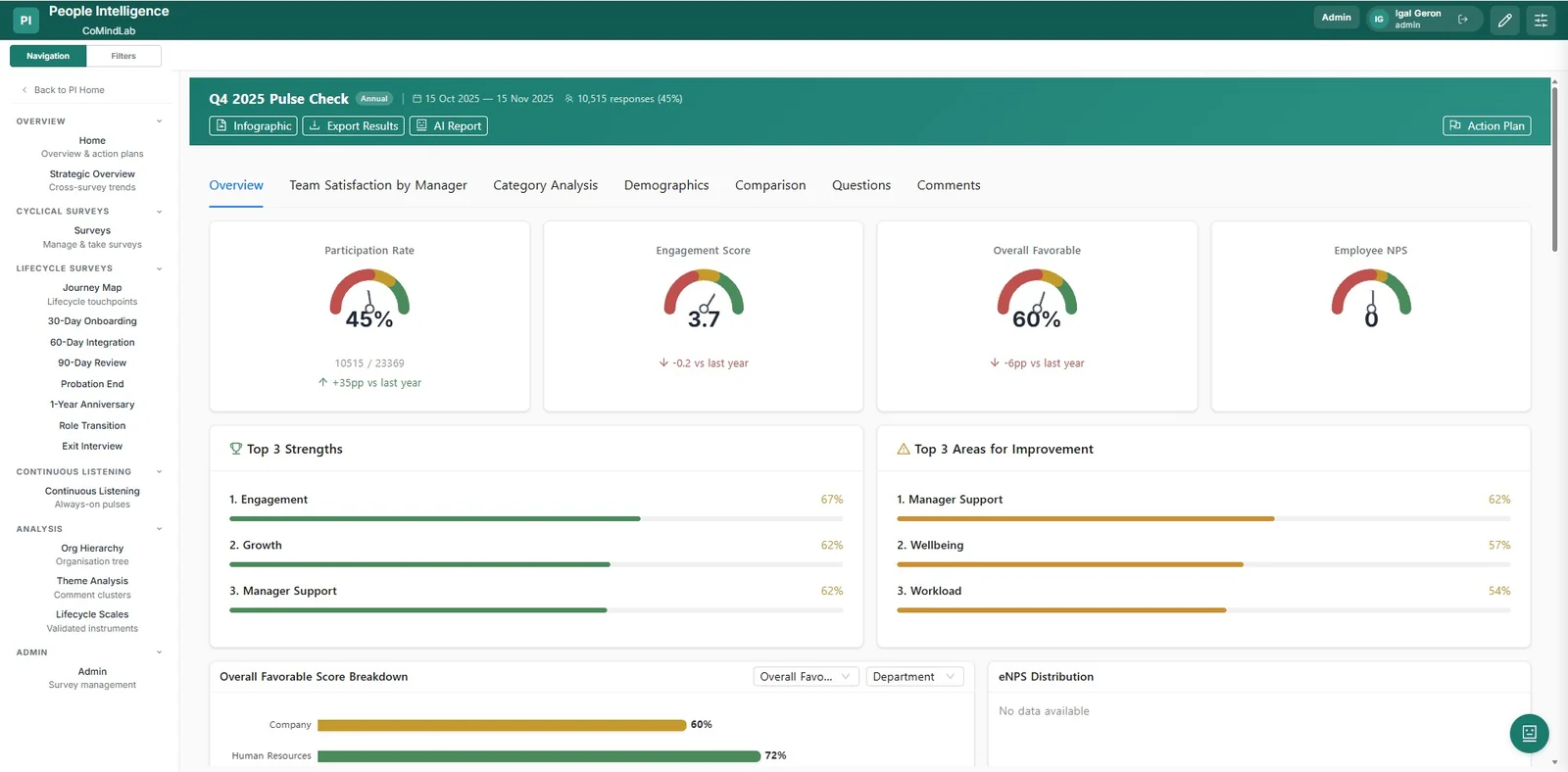
A People Intelligence employee listening view — a pulse check showing participation rate, engagement score, overall favourable and employee NPS against last year, the top three strengths and the top three areas for improvement, and a favourable-score breakdown by department
Live view · a pulse check read as strengths, gaps and movement against last year, not a single score

Lifecycle surveys, continuous pulses and exit interviews feed the same picture, so the story holds across the whole employee journey. A score tells you where you are. The drivers tell you what to do about it.

The delivery path

Every step uses the same inHR model.

01 · Strategic Direction

Frame the questions

  • Connect listening to business and people priorities
  • Agree the decisions the evidence must inform
Decision questions + analysis plan
02 · Business Intelligence

Find the signal

  • Analyse drivers, segments, themes and material differences
  • Separate correlation, context and credible explanation
Executive story + analytical evidence
03 · Activation

Turn insight into action

  • Assign owners to a small set of actions
  • Define measures and the follow-up review
Action architecture + tracking rhythm
Completion standardThe work is complete when leaders can explain the priority signals, the evidence behind them and the actions they will track.

Business Intelligence

Discuss employee listening.

Discuss employee listening